
Module 2 – Sleep
This is such a HUGE component of health and especially fat loss! People unfortunately do not understand or take this area of their health seriously enough.
Yes sleep has a direct impact on our metabolism, hormones, our way of thinking, mood, energy, immune system, response time, cravings, ability to make good choices and more. Yes different people require different amounts of sleep. Yes some can run on less than others but the MAJORITY need 8 hours of sleep a night. There is a lot of talk about sleep chronotypes, but I am not so sure that I believe in this idea fully. Especially when you look back at our ancestors, they all went to bed when the sun went down and rose when the sun came up. Further more, if you look at our circadian clocks (the internal clocks that regulate hormones and functions in our body), they are activiated by light signals in the morrning and start to switch off as it gets dark. Even looking at studies done on night shift workers, like the nurses study, shows us that not sleeping when the body is designed to, throws off our circadian rhythms, and drives up poor health and disease.
Believing you are a “night owl” is just another way of saying you have “circadian dysregulation”.
If there is one thing that is sure to cause massive systemic inflammation in my body, its a poor nights sleep! Luckily we now have lots of tools to stack conditions in our favor and optimize sleep.
Some signs that you are not getting enough good quality sleep;
fatigue
carb/sugar cravings
constant hunger
irritability
brain fog
feelings of sadness or low moods
inflammation
headache
dehydration
dry eyes
dry skin
jitters
slow metabolism
poor quality workouts
stiffness or aches in your joints
constipation
Getting to bed at the right hours and having good quality sleep, are very important. So many factors come into getting a good night’s sleep, but these I feel are the most important;
getting direct sunlight during the day – particularly 15 to 30 minutes after you wake, even if its just through a window
exercising early in the morning or mid afternoon
walk in the evening after dinner (or anytime of the day if you can’t get out after dinner), many people will attest to fresh air helping them sleep better
sleep in complete darkness
stay cool when you sleep – keep a window slightly open or a fan on if you need to, but remember fans increase dehydration
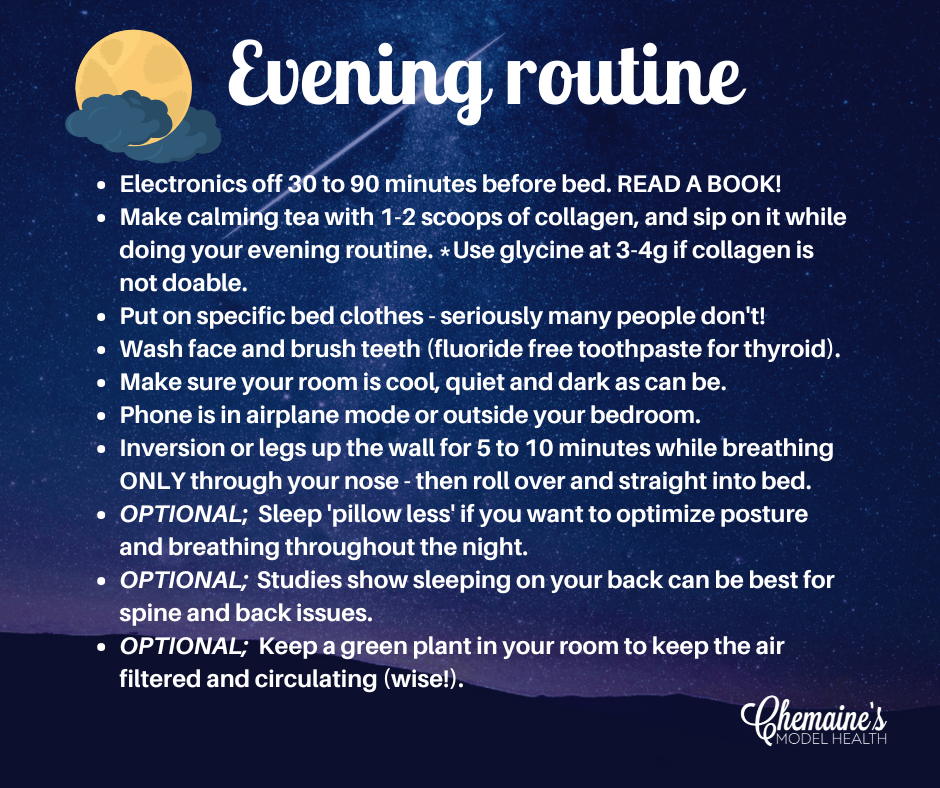
make an evening "calming tea". My first recommendation is always "Tulsi & ginger". This works very well for most people. And add 1-2 scoops of collagen. The glycine in collagen helps to push us into deep sleep. You would drink this 30-60 minutes before bed.
practice inversion or ‘legs up the wall’ before bed every night!! You know who you are! 😉
keep some plants in your room - Lavender, Jasmine and Snake plants are good options
keep all electronics out of your room – if you have electronics in your room, make sure the are completely plugged out at least 30 minutes before bed. Phones should be kept outside the bedroom, powered off or set to ‘airplane mode’. The only electronics in my room is my phone and it always goes into airplane mode at night.
avoid fake light in the morning and evening – work with the earth’s natural rhythm
take advantage of free software like Apple’s ‘night shift’ for your phone and ‘f’lux’ for your pc (this also works on Android phones).
there are many supplements that support sleep quality. My preferred ones are; GABA, Skullcap or Baicalin, Magnesium, True Calm by Now Foods. And flower essences Rescue Night Remedy by Bach.
Sleep is where we do our healing, regeneration, cellular clean up and most of our fat buring (especially when fasting), so make it a priority!
Some of the top causes of sleep disturbances, including poor sleep latency and insomnia, are;
A racing mind due to stress and or anxiety - AKA adrenaline dominance.
Toxic overload
Adrenal exhaustion - usually caused by chronic stress and adrenaline dominance
Poor thyroid health - usually caused by chronic stress, systemic inflammation and nutritional deficiencies
Dehydration
Hunger
Caffeine - either too much or consuming it too late in the day. *I generally recommend no caffeine after 2 pm or noon if you have sleep and adrenal issues. One coffee a day is perfect and remember you also get caffeine from; black tea, green tea, yerba mate and dark chocolate.
Blue light exposure after 6 pm, especially in the darker months, is the biggest suppressor of melatonin and thus your ability to get into deep restorative REM sleep
Lights and noise, inside and outside the room – even the tiniest red light on a TV has been shown to interfere with sleep quality
Temperature - the body likes to be cool for optimal sleep - ideally our core temperature should drop to around 17 degrees Celsius
Night sweats due to either menopause, stress, or poor nutrition
Tension around the neck and trapezius due to over training/ over exercising
%
Of people experience poor sleep quality due to excessive caffeine consumption or from having caffeine too late in the day. I usually advise people avoid caffeine after 2pm.
Not to over complicate things, I would like you to listen the below podcast episodes again (hopefully you have already), these are very informative and will help you understand the implications that poor sleep has on health and your body weight more.
RESOURCES;