Module 2 – Protein
Proteins are the building blocks of life. They make up each and every cell in our body. Protein is essential for building a repairing cells and tissues. Especially its derivatives; collagen and amino acids.
You need protein to put meat on your bones and to make hair, blood, connective tissue, antibodies, enzymes, and more. Did you know… that when you eat protein, it gets metabolized and absorbed in the intestines and the liver first. Once they have taken what they need to be healthy and function properly, then the remaining protein gets sent out to the rest of the body like the muscles, bones, hormones etc.
A single cell holds 42 million protein molecules!
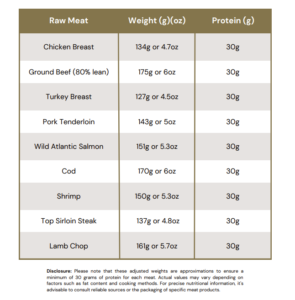
There is a lot of confusion around protein but generally aiming for 1g of protein per pound of your goal body weight is a good safe bet (this can be a big ask though), so at least aim to get 30-50 g of protein in each meal. This recommendation also comes out of Dr. Bill Campbells office, one of the leading researchers in the field of exercise and metabolism (University of Florida).
Note; Too much protein in the presence of a high carb/sugar diet will make you gain weight.
Protein consumed in the presence of a high carb diet will cause a glycemic/insulin response, where as protein consumed on a low carb template will cause no response and keep you in fat burning mode. This means too much protein in the presence of a high carb/sugar diet will make you gain weight. We are looking for “balance” here.
Excess calories and carbohydrates are protein sparing too. So you don’t actually “need” as much protein if you have a high calorie diet. Unless you are activly trying to build muscle.
If you want to learn more about this I recommend you check out the video below by Dr Ben Bikman.
Everything should be considered in context!
Protein and health
Protein is essential for virtually every one of your cellular functions. Most people, when they think of protein, think of building muscles, but there’s much more to protein than merely muscle. You need protein for the structure, metabolic function, and regulation of all tissues and organs, including muscle.
Every cell in your body is full of enzymes, which are proteins that control your metabolism. Protein is also important for neurotransmitters which are responsible for mood and even sleep. Your bones, your ligaments, your tendons, your liver, your brain, skin, and fingernails are all built from proteins. To truly understand protein, we must first understand that proteins are built from amino acids, which are the foundation of how we will build our diet.
By getting your protein intake correct, you will get your amino acid requirements correct. There are 20 amino acids; some sources of protein have more and/or a better balance of the individual amino acids than others.
Time and time again, studies show us those that consume higher amounts of protein, alongside a good nutritional protocol, lose more weight and have more fat loss sucess in the long term. People who consume more protein also have;
Better sleep.
Better mental health.
Better thyroid function and metabolism.
Better hormone balances.
Better immunity.
Better strength and resiliency.
Lower cravings.
Lower inflammation.
Most people don’t know that protein plays a BIG PART IN MENTAL HEALTH!
Foods rich in protein contain amino acids to help produce key neurotransmitters in preventing and treating depression and anxiety. Ref.
Point of interest;
When you consume too much protein, especially if you are NOT exercising, your body must remove more nitrogen waste products from your blood, which stresses your kidneys. Chronic dehydration can result, as was found in a study involving endurance athletes. This is where having days of low protein can be beneficial… like our fasting Sundays!
Good sources of protein |
|
| Food | Protein (grams) |
| 3 ounces tuna, salmon, haddock, or trout | 21 |
| 3 ounces lean cooked turkey or chicken breast | 25 |
| 6 ounces 0% plain Greek yogurt | 17 |
| ½ cup 0% cottage cheese | 14 |
| 1 tablespoon of collagen | 10 |
| 1 cup of hemp milk | 3 |
| 1 tablespoon of Spirulina | 4 |
| 10 Almonds | 3 |
| 1 medium egg | 6 |
Protein sources for vegans and vegetarians;
Green peas – 7.9g per cup
Quinoa – 8g per cup
Nuts and nut butter – 56-g per ounce
Beans – 12g per cup
Chickpeas – 14g per cup
Leafy greens – two cups of raw spinach contains 2.1g of protein, and one cup of chopped broccoli contains 8.1g.
Hemp – 10g of protein in 3tbsp
Chia seeds – 4.7g per 2tbsp
Raw cacao powder – 1g per tbsp
And of course some of the mentioned foods above
The numbers above are only “approximate” and there is another reference chart below in the resources.. There are also several posts in the Facebook forum that covers best sources of protein, my favorite protein sources, protein powders and amounts. If you are hitting 90g-100g of protein a day, then don’t stress too much. I feel this is a good target for most, but if you can get more, then do! This is a case of the more the better!
This keeps you full, supports metabolic rate and supports retention of muscle (and bone) during a fat loss campaign and stressful times. At the very least, do not reduce protein when trying to lose body fat!
When looking at protein, we need to understand “collagen” and “amino acids”. These play very important roles in the body, and can be very useful tools when used properly for; mental health, sleep, boosting hydration, fat buring, satiety, hitting protein targets, and slowing down aging.
Collagen
Collagen is the scaffolding that holds everything together!
Collagen is the most abundant protein in the body. Collagen in women, men and nearly all animals is a fibrous/fibrillar protein that constitutes the connecting tissues and fascia of the human body. Collagen gives the body structure, keeps everything strong and keeps the body young.
Collagen plays a big role in a womens menstrual cycle. In each phase of your cycle, collagen is needed, but also your endometrial tissue is made up of collagen. So, everytime you have a period, you lose a lot of collagen. And the heavier or longer your period is, the more collagen you lose and the faster you can age. This is why women get wrinkles earlier in life or faster than men!
When choosing collagen we are looking for “hydrolyzed collagen peptides”, this is very important because when we consume “just collagen”, depending on how good your digestive system and hydrolosis is, will determine how well you absorb the collagen and activate it. So, if your digestive system is not so good, then the bioavailability of the collagen may be almost zero. But when you hydrolyze collagen down to its peptide form, you activate the petides and amino acids, so they can be used more efficiently (in a way that achieves maximum productivity and results with minum effort).
There are many different types of collagen in the body. If you see “Types” on a collagen product, this is irrelevant. Once a product has been hydrolyzed and broken down to its smallest bioactive peptide form, types mean nothing. On a label, this is merely a maketing ploy from a manufacter, to fool the consumer into thinking their collagen is better than the one that lists no ‘Type’.
“Bioavailabilty” means the food and nutrients you consume are easily digested and assimilated in the intestines, and then transported and put to work throughout the body.
Amino acids
Amino acids are the simplest forms of protein. These tiny protein molecules, that when combined, form our bigger protein nutrients like collagen peptides and gelatin.
The human body uses amino acids to make proteins to help the body:
Digest
Grow
Repair and regenerate body tissue
Perform many other body functions, including keeping good mental and adrenal health
You may see me recommend “essential amino acids” to some people, these are not your BCAA’s or Branch chain amino acids, but the full 9 essential aminos acids that the body can not make itself and are needed by some extreme athletes or exercisers (and others), to support health and performance. I generally DO NOT recommend BCAA’s. More on this below in the resources.