
How much food to eat
In short, you want to eat enough to maintain energy levels, muscle mass and hormonal health, but no more.
Numerous studies have found, including studies on Sirtuin proteins, that a 20 to 40% calorie restriction/defecit in your diet causes favorable gene expression, healthy body mass, improved biomarkers, slower aging and increased longevity.
Eating less can also improve mitochondrial function (we want this), keep inflammation low, and improves the bodies methylation or detoxification systems.
Remember; even though we don’t always count calories… we understand that when we focus on nutrient dense foods, they are naturally low in calories. And we understand that foods higher in fat are higher in calories.
Some people DO need to track or measure or count macros/calories but not everyone. For some people, maintaining awareness around “numbers” is important to make sure they are getting proper adequat nutrition and calories to maintain metabolism (and good health).
So you want to,
Take in enough to maintain energy and focus, without postprandial (after meal) grogginess.
But remember there does need to be some sort of calorie deficit over the week for fat loss – that deficit is individual depending on ones thyroid health, basal metabolic rate, estrogen and progesterone levels, and stress.
Intermittent fasting is one strategy that works well for most people to keep calories low but you want to make sure you eat enough during your meals and have lots of dense nutrition, to prevent binging or over eating later in the day, and keep your metabolism/body running properly.
Make lunch your largest meal of the day. This is where you would include healthy animal protein, non starchy veg, 1-2 approved carbs and fats (limit if you are still trying to lose weight as these are calorie dense and do not go well with carbs).
The best time of the day for carbs for most people is lunchtime. This restores glycogen levels in the brain and tissues, helping prevent carb cravings and over eating later in the day. This also gives you a boost of energy and “pick me up” so you can crash later in time for bed.
Remember to stay hydrated as every cell in your body requires water, especially high grade water that has some nice minerals and frequency to it.
Dehydration WILL slow detoxifcation, leading to toxic overload in the body, liver issues, gut issues, and skin issues. Dehydration also increases hunger and sugar cravings.
Refeed properly because this will boost Leptin hormones (your satiety hormones), which will help it be easier to consume less on the following days.
Remember that poor sleep, stress and where you are in your menstrual cycle will influence hunger and cravings.
SIDE NOTE; Insulin is anabolic or promotes growth (more than testosterone). So, to prevent unwanted weight gain or inflammation that can result from elevated insulin levels… I have advised of a minimum carbohydrate load daily, to try limit any spikes in blood sugar to once or twice a day. *There are exceptions to this of course if you are pregnant, breastfeeding or have increased movement on a daily basis.
PS: As much as I am aware that eating organic is not always feasible, I do encourage you to choose organic ‘where possible’. This is especially important when choosing green veg, berries and eggs.
Organic food provides the body with more anti-oxidants, vitamins and minerals, and possesses less harmful elements such as chemicals, hormones, antibiotics, vaccines and genetically modified organisms (GMOs). Organic food is safer for your long term health, as it does not possess herbicides or pesticides that kill off your good gut bacteria. Refer back to the section on organic foods in module 4.
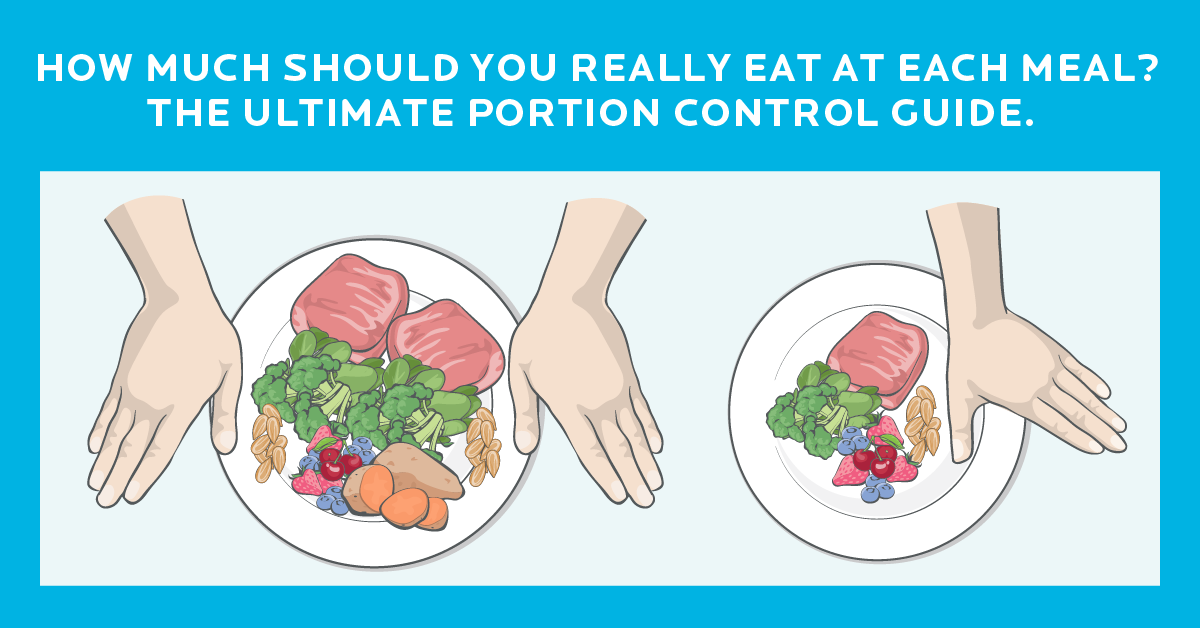
The double hands represent the portion sizes applicable to most men. The single hand represents the portion size applicable to most women. I know this is smaller than you receive in a restaurant or are maybe used to, but this information is accepted and supported by Precision Nutrition (one of the schools I am certified under), and many other respected scientific nutrition bodies and schools.
fat the size of your thumb (1 tbsp)
protein the size of the palm of your hand (4-6 ouces)
non-starchy vegetables 1-2 fist size servings (1-2 cups)
for carbohydrate-dense foods – like grains, starches, or fruits – use a cupped hand to determine your serving size. (generally the same as 1/2 cup).
fairy dust can be used generously BUT be careful with "sauces" or dressings - keep these to 1-2 tbsp. Mustard, hot sauce and anything spicy or vinegary can be more.
RESOURCES;
This video below will surprise you and be very educational with understanding “portion sizes”.
Hunger, energy and cravings are a good indicator if you are eating enough and hitting nutrient requirements.
IS your HEC in check? See posts in the forum for more on this.
Your content goes here. Edit or remove this text inline or in the module Content settings. You can also style every aspect of this content in the module Design settings and even apply custom CSS to this text in the module Advanced settings.