
Module 4 – Why diets fail.
Why diets work…
It’s quite simple, it all comes down to consistency and some sort of restriction, and… adaptation. Which most people never consider. The body is smart and will adapt, but in the beginning … of a new diet or health journey, changes happen before adaptation, so you see results before you stop seeing results or “plateau”.
Like that high intensity bootcamp you attended for a month. It was hard at first but then you adapted and it got easier.
To demystify the mysteries around certain diets working better then others – in truth they all work. But at the core, in order to lose body fat, especially a considerable amount of body fat, it is going to require some sort of restriction. Whether that is tracking your calories, tracking macros, restricting your carbs, restricting processed foods, restricting your dietary fat, practicing some sort of fasting or time restricted eating, whatever it may be – its going to require some sort of restriction. The beautiful thing is, you get to pick what the form of restriction that feels least restrictive for you!
And in the research to date, they have shown that amongst different diets, there really is no difference in adherence – meaning the adherence comes from the individual, not necessarily the diet – keep reading.
There was one meta analysis that looked at 14 different diets. The Mediterranean diet, low carb, intermittent fasting, and other popular diets, and they found there was no difference in adherence between them. So what that says is; find what diet works for you as an individual that you can adhere to… but on a population level, what feels restrictive or doable is going to vary from individual to individual.
The takeaway here is that to be successful, you need to find what feels the least restrictive for you, that you feel good doing, that gives your results, and that you can continue to do for the rest of your life.
There is no one diet that is better then the other in regards to outcomes. What matters is compliance & sustainability.
A new diet or way of eating is a new challenge for your body, so your body will get a fright per se, and experience changes regardless — but for how long? Your body will adapt eventually and maybe said diet is actually quiet harmful or bad for your health. That’s where understanding good nutrition and body fat set point is important. Video below.
EXAMPLE;
If you regularly eat 2000 calories a day but I put you on a diet of 1000 calories a day of eating only chocolate and diet coke. YES you will lose weight but you will be unhealthy, eventually plateau, and potentially get ill.
But what if we could combine the best components from some of the best “diets”, do some trial and error to see what works for you? And then use what we learn, to blend everything into one way of eating or lifestyle? Well… You would be getting the best of everything, you would be learning what your body likes and responds well to, and hopefully creating something that is sustainable to you. Plus this would be more in line with your ancestral genes, because let me tell you, our ancestors had a balanced diet, and definitely didnt have the exposure to processed foods, fast food, Netflix, and a sedentary lifestyle like we do today.
What it comes down to, at the most basic level, is cooking your own food with real, whole ingredients, that support the biochemistry, hormones and rhythms of your body. Yes, it takes a little more planning, more time, and probably a little more money than the alternative. But with practice it’ll become easier, and soon a habit will form, and this way of eating will be second nature. It will just be your life. And by now you will have noticed you eat less — so actually it can be cheaper!
Here are some simple RULES to live by:
1
Avoid processed foods and sugars
2
Get most of your foods from nature
3
Cook your own food
4
Make Low GL or low sugar fruit and vegetables a big part of your diet
5
Drink a smoothie or homemade juice with the pulp a few times a week
6
Avoid grains – specifically wheat, barley, rye and spelt as much as much possible unless “sprouted” or fermented like sour dough
7
Eat a wide variety of whole foods, especially superfoods
8
Don’t drink your calories, with the exception of a smoothie, juice, soup or organic coffee or tea
9
Eat when you are hungry but make sure you ARE actually hungry – real hunger is when you feel slightly nauseous
10
Break these rules from time to time.
- 95% of weight losers regain the weight within 5 years. 95%
To help you be in that 5% that keep the weight off, you need to be aware of the traits of successful people, who keep the weight off “long term”;
• They practice some sort of cognitive restraint.
• They self monitor, so they track and or measure what they are eating. They also keep track of biomarkers or other measurments of change. They do weigh themselves regularly.
• They create good habits and behaviors.
• They place realistic expectations and time frames on their goals and journey.
• They reclaim their habits fast i.e. they get back on track immediately.
• They show up every day, even when they don’t want to. They practice consistency.
• They practice discipline, knowing that when the temptations are high, they may need to practice tough love sometimes to help stay on track.
• They have some sort of accountability partner or group, that they check in with regularly, regardless of what’s happening in their life.
• They exercise regularly. According to some research (below), physical activity levels are perhaps the strongest predictor of successful maintenance.
Research shows us…
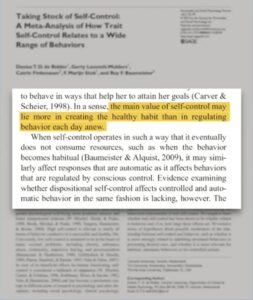 A common mistake people make when starting a new health journey or getting back on track with things is, they rely on motivation too much. Which eventually fades. And they also underestimate the difficulty of their journey.
Changing your body takes discipline, hard work, proper guideance, and time! Lots of time!
But why do diets fail??
Its simple… because people stop doing what helped them lose the weight in the first place.
Yes there may be other variables like your metabolism slowing down (reverse dieting can help here), or you plateau, or maybe there is thyroid and inflammation issues. But usually its because people stop showing up for themselves and don’t stay on their plan. Do you agree?
If the habits and lifestyle that you developed during weight loss, are not continued during maintenance, you will put back on the the weight (and possibly more). Plus, most people dont consider the diet after the diet. What does your diet look like after you hit your goal?
Yoyo dieting is also a big problem, so people who lose weight and gain it back over and over again. Basically every time you diet you awaken the bodies self defense system – this is all discussed in my video on body fat set point below in the resources. The more you yoyo diet, the more you can increase your body fat set point and you gain more fat easier when your off your diet. This of course further discourages people because it makes future weight loss more difficult. *There are ways to help prevent the rebound weight gain and “offset” potential regain… more to come.
Metabolic adaptation;
Many people don’t understand metabolic adaptation, so when it happens to them, they don’t know what to do and get disheartened. But metabolic adaptation happens to most of us. Because as you drop weight your metabolism is going to slow down a little bit, just from the fact that you lost weight, so it takes less calories per day to keep you upright.
Based on the studies, depending on how much weight you have lost, your metabolism can slow down by 15-30%. Slowing you down and making you more efficient. Why does this happen? Well you basically need to think of a fat loss diet as controlled starvation. And this triggers your body to try defend you and prevent you from starving. This is a slow down in your BMR or basal metabolic rate too. Refeeding, diet breaks and reverse dieting can help offset this.
But if you don’t do what is needed to keep your metabolism strong and support your total daily energy expenditure, then your metabolism will keep slowing down and you will keep gaining, even though you are eating the same as you did when you were losing weight, until your body gets back to the body fat that it feels safe at. Watch the body fat set point video, you will understand better.
The research also shows us that when you lose weight, your NEAT also goes down. Thats your non-exercise activity thermogenisis. People move less, fidget less, they even talk slower, without even noticing, reducing your calorie expenditure by up to 500 cals.
Then your exercise activity, people tend to exercise less and at less intensity when they lose weight because they just don’t have that same energy or endurance. Your body will also adapt to the exercise and use less energy to perform it. This is why its important to have those planned higher calorie meals or days, and switch up your exercise routine every 8-12 weeks.
Maintaining weight loss should be sustainable and not miserable. And your calories should be at an amount thats enjoyable and satisfying, while giving you some flexibility and maintaining your results.
So how do we keep the weight off in the long term?
Well you need to keep doing what you did to get the weight off in the first place. But also have some tools to make things easier. This will be reinforced in the “principles for success” tab in module 5.
Have a diet plan for after the diet. Many people don't consider the diet after the diet! But you need to have a plan of what your going to do after you hit your goal weight.
Stay consistent. Don't get complacent just because you are at maintenance.
Create good habits and routines, as per the study above to make things easier and more natural.
Exercise, especially weight lifting. The research shows us that exercise lowers body fat set point.
Understand the idea of "eat more exercise more". Listen to my podcast on G-flux here.
High protein diets have been show to increase daily energy expenditure through the thermic effect of food.
Use polyphenols daily, these have been shown to help with rebound weight gain through many mechanisms. Examples would be; green tea, black coffee, berries, apples, vinegars, dark chocolate... you know this!
Take collagen daily, this helps with cellular matrix strength and health, which can help the cell to not swell or grow back to their original size.
Continue to keep track of your weight and even your food. When we stop weighing we start to kid ourselves. Continuing to track food will be helpful to see what your maintenance calories if you do plateau, or adapt, or slow down.
If your metabolism does adapt or slow down on lower calories, you can use diet breaks or reverse dieting. Check out my video on reverse dieting on my YouTube channel - there will be a section coming on reverse dieting soon.
Helpful resources;
Understanding body fat set point.
Emotional readiness… the reason you keep failing
Taking stock of self control: a meta analysis
By 5 years practically all of weight lost has been regained STUDY
Physical activity levels a strong predictor of weight loss maintenance STUDY 1
Physical activity levels a strong predictor of weight loss maintenance STUDY 2
Physical activity levels a strong predictor of weight loss maintenance STUDY 3
Master round 7 group call 5 – you NEED to watch this if you want long term success! Trust me.