
Module 4 – Stress
Stress.
This word gets thrown around a lot — God knows I’ve mentioned it. But what is stress and how does it affect us?
The dictionary says; Stress is ‘a state of mental or emotional strain or tension resulting from adverse or very demanding circumstances’.
In the natural health world, we recognize stress as:
anything that causes change in the body.
Firstly;
Let’s debunk one myth. Stress is not necessarily a ‘bad’ thing. Without this brilliant ability to feel stress, humankind wouldn’t have survived. We also need some good stress to grow and survive at times. Our cavemen ancestors, for example, used the onset of stress to alert them to a potential danger, such as a sabre-toothed tiger. But nowadays we don’t have sabre-toothed tigers. So when stressed, the body thinks it is under attack and switches to ‘fight or flight’ or survival mode, releasing a complex mix of hormones and chemicals such as adrenaline, cortisol and norepinephrine (these are all stress hormones) to prepare the body for physical action.
When these stress hormones rise, our body thinks it is under attack or needs to reserve as much fuel/food/fat as possible for survival. This means that when our stress levels are high our body stores more fat. and shuts down immunity. This includes stress from high intensity exercise or cardio. This can cause us to plateau and struggle to lose excess body fat, especially fat around the abdominal area, butt and thighs due to a slow down of the thyroid, metabolism, and increase in insulin resistance. And can cause us to be more susceptible to illness and infections. Stress also impacts our adrenals and sex hormones greatly. If stress is bad enough – it will cause adrenal malfunction and shut down your mentrual cycle, causing your to not have a period.
Stress also damages cells and our gut health to a high degree. Therefore it is important that we manage stress accordingly.
Stress causes your thyroid and metabolism to slow down, increases insulin resistance and makes the body store fat, particularly around your belly, thighs and butt.
Main causes of stress would be;
endless to do lists
deadlines at work
issues with family life
health issues
chronic pain
poor sleep
struggles with body weight
relationship problems
pandemic scares
being a parent
being unhappy in your job
financial worries and so on.
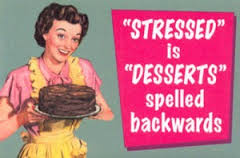
So how can we manage stress? There are many ways to manage stress, but here are the ones I utilize. I encourage you to take a moment to write down ways that you can manage stress, that relate to you! Stick them on your mirror or bedroom door, as a reminder to practice daily stress management.
Long walks in the fresh air
A funny movie (one of my favorites!)
A long workout for your body and mind in the gym
Listening to my favorite music
Inversion or ‘legs up the wall’
Yoga or Pilates in the morning or evening
Getting out of the house and having a look around a mall
Taking in beautiful scenery
A glass of red wine
Get lost in your favorite book or magazine
Practice your favorite hobby, create beauty
Laughing with friends
A soak in a hot epsom salt bath with candles and essential oils
Doing your hair or makeup
Baking or cooking can be relaxing
HAVING YOUR FOOD PLANNED OR PREPARED FOR THE COMING WEEK CAN RELIEVE A LOT OF STRESS!
The above all sounds glorious, doesn’t it?!
Foods known to help with stress are wine, chocolate (especially dark), avocado, walnuts, spinach, broccoli, blueberries, oranges, parsley and water. St John’s wort, Lavender, Turmeric, GABA, Magnesium, 5HTP and Vitamin D3 are also good for making you feel ‘happy’.
*This section will be enhanced with more directionsover the next few weeks, including content on anxiety.